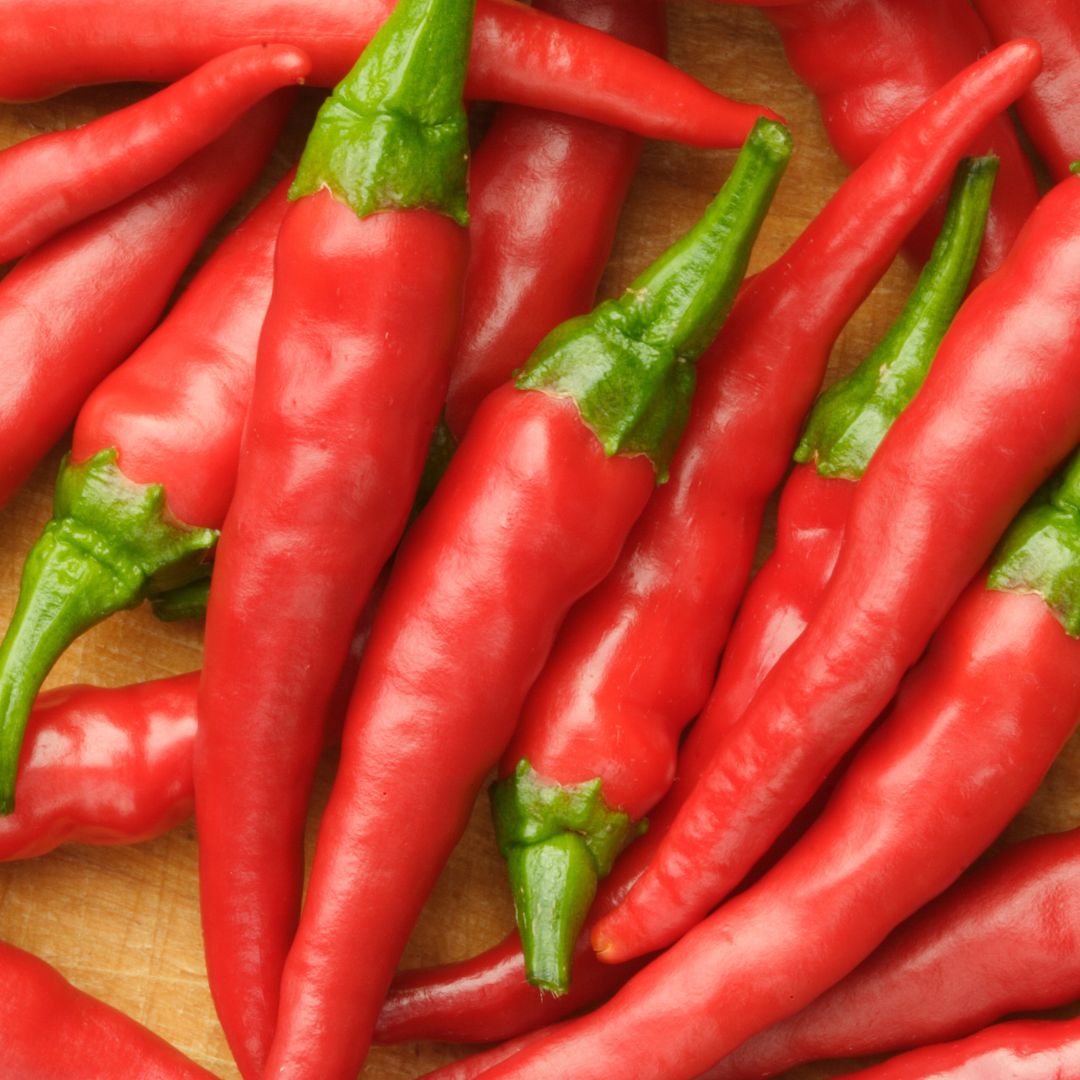
Hailing from the warm climates of South America peppers were spread throughout the world after the arrival of Spanish explorers. They have become a staple food in many cultures providing heat and sweet flavors for a variety of dishes. They are also great to eat on their own or with your favorite dip.
Cayenne Pepper
$3.00
Description
Season: Warm Season
Exposure: Full sun
Maturity: See individual packages for maturity times.
Starting Seeds: Start peppers indoors in late February or early March. It can be helpful to provide bottom heat to speed up germination.
Spacing: Transplant peppers after your last frost allowing for 1.5 feet between each plant. If planting in-ground in rows plant double rows with 1 foot between them. This will allow you to save room and grow more plants.
Fertilize: Before planting, amend the soil with plenty of compost (roughly 1 inch thick). Peppers are long growing plants and have different fertilizer requirements depending on their stage of growth. Early on in their growth, provide a higher nitrogen fertilizer, this will help the plants grow bigger healthier leaves. Once the plants begin to flower, provide a fertilizer with more phosphorus and potassium to encourage more flowering and fruit production.
Watering: Provide your peppers with 1” (2.5cm) of water each week, or more in hot and dry conditions. In volume this will be roughly 2.5 liters per square meter of garden space.
Harvesting: Peppers can take between 75 and 100 days until they reach maturity. In general, hot peppers take a little longer than sweet peppers do. But the size of fruit will also play a factor in timing. Peppers can be harvested at almost any stage; they tend to all start green and will change color as they ripen.